Part 2: The Fire that Stayed
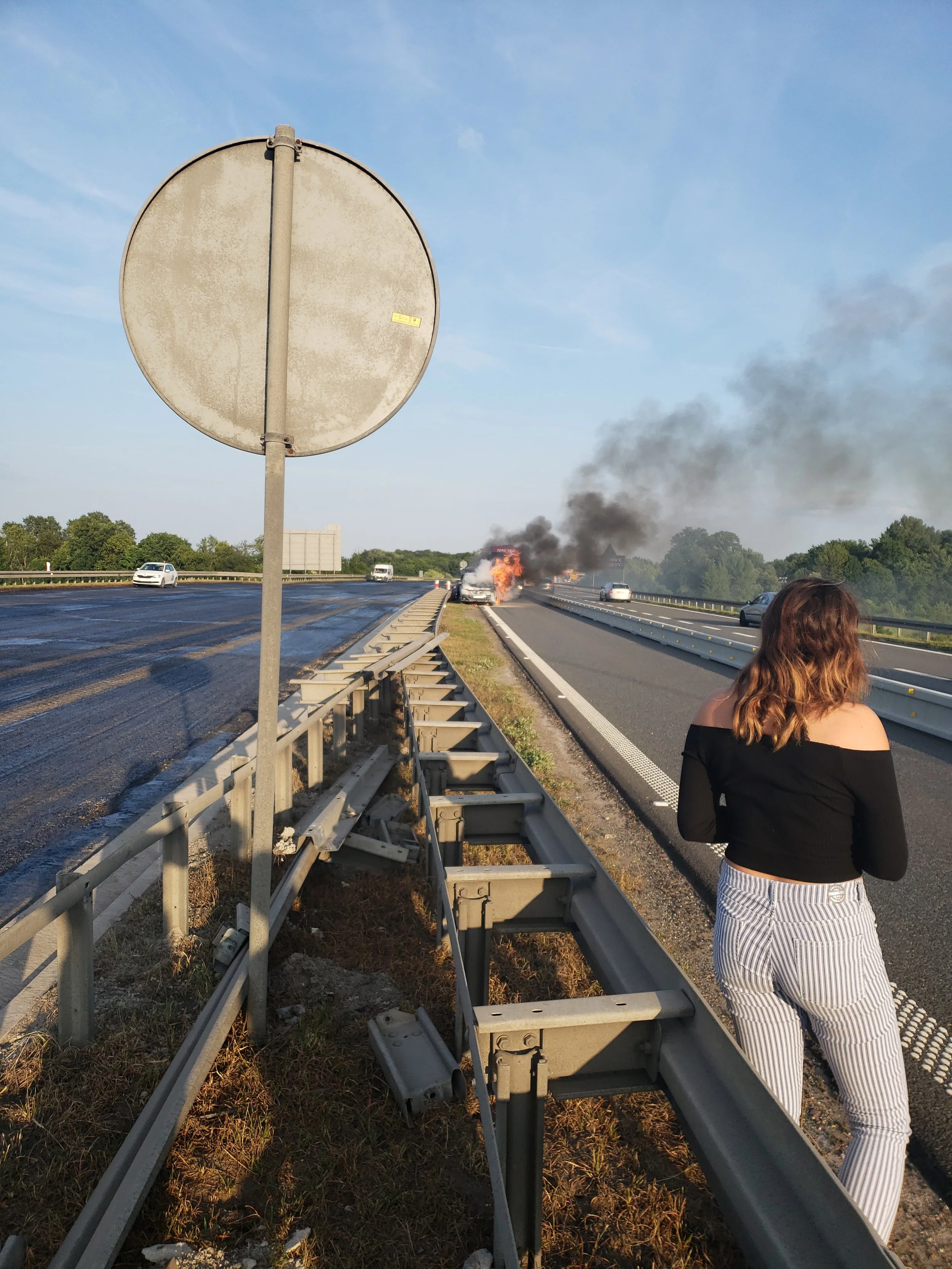
Watching her belongings burn
The engine lights came on one by one, then all at once — a cascading series of warnings across the dashboard. The car made a strange grinding sound, the kind that instantly puts a knot in your stomach. My husband pressed the gas, but instead of accelerating, we slowed down.
We were boxed into a single narrow construction lane on a freeway in Poland, concrete barriers on both sides. There was no shoulder, no exit, nowhere to pull over.
Cars in the opposite lane passed just a few feet away. Drivers pointed at us, shouting things in Polish we couldn’t understand.
And then my daughter looked out her window, down where people were pointing, and suddenly screamed, high-pitched and terrified:
“THE CAR IS ON FIRE!”
My husband didn’t hesitate. He stopped immediately.
We flung the doors open and jumped out — and almost as soon as our feet hit the pavement, flames erupted from underneath the car.
There was no gradual build-up, no moment to assess or plan.
Just: warning lights → scream → stop → fire.
Everything shifted at once.
— ✦ — ✦ — ✦ —
Getting the Kids Out
I pulled the boys over the concrete barrier into the closed construction zone — the only safe place available — and dragged them to a safe distance. The boys stood beside me, oddly calm, watching the fire with a kind of quiet fascination. They didn’t feel the urgency that was pulsing through my whole body.
My daughter, though — the one who had steadied her brothers during the waterspout — was frozen.
She said nothing.
No crying, no screaming now.
Just wide-eyed shock.
I screamed at her to come over.
She was barefoot — her possessions were inside the burning car — and she limped across the rough, uncomfortable pavement, wincing with each step but not truly reacting to it. In shock, she moved only because I was screaming for her to follow.
It was such a stark reversal of the storm years earlier:
the helper now frozen
the frozen child now composed
the calm parent now terrified.
Same people.
Different storm.
Entirely different nervous systems.
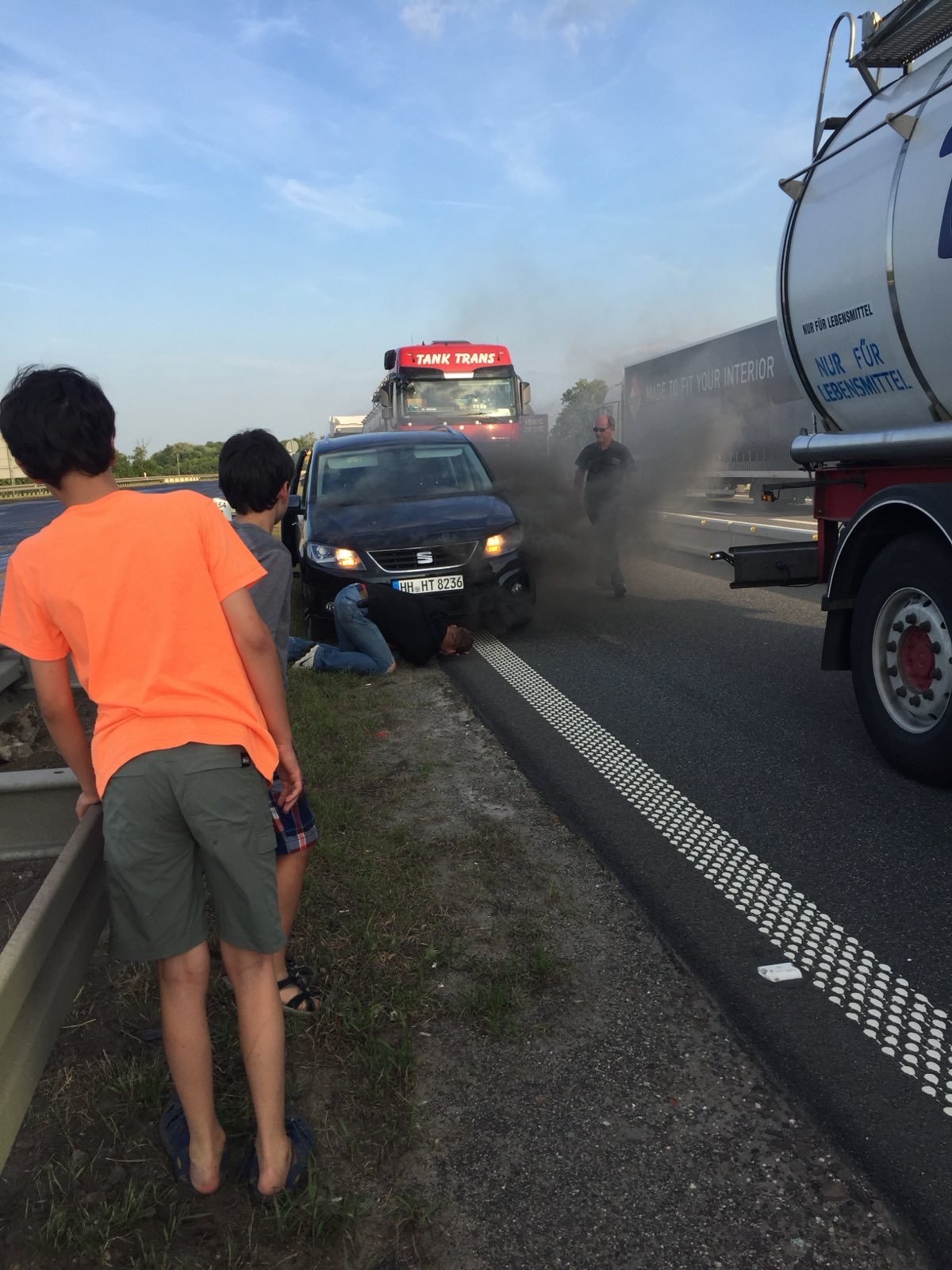
The boys watched. The fire escalated.
— ✦ — ✦ — ✦ —
My Husband Runs Toward the Flames
While I was pulling the kids to safety, my husband went to the back of the burning car and opened the trunk.
Instinct. Pure instinct.
He grabbed suitcases — any he could reach without stepping directly into the flames. Melted plastic dripped from the bumper. Smoke poured upward.
He yelled “WHERE ARE THE PASSPORTS?”
I screamed at him to get away. I was certain he would be killed at any moment when the car exploded.
He didn’t hear me. Or maybe he did, but the urge to retrieve legal documents in a foreign country — the passports — overrode everything else.
He kept shouting “WHERE ARE THE PASSPORTS?”
Between screams for him to leave everything behind, I yelled back, “THE PASSPORTS ARE IN THE ORANGE SUITCASE!”
He shouted back, frustrated, “WHAT ORANGE SUITCASE?”
Because of course… he calls that suitcase RED.
Even in catastrophe, we were speaking different languages.
In the end, he saved our luggage from the trunk, but not from the middle or front of the minivan.
My purse was gone.
My daughter’s guitar, her clothes, her shoes, her purse — all gone.
Everything she had brought on the trip burned before we could reach it.
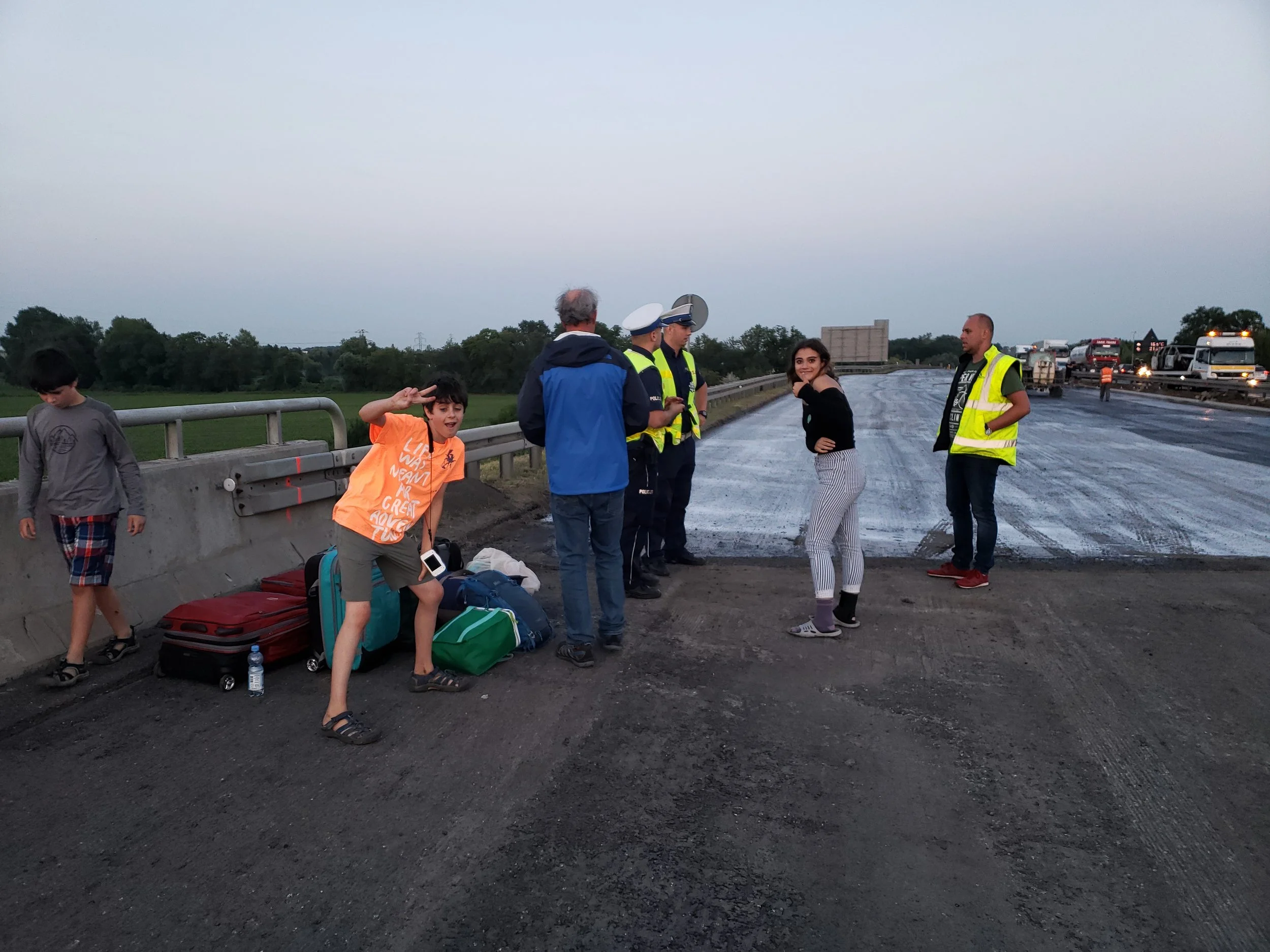
Rescued luggage
— ✦ — ✦ — ✦ —
The Kindness of Strangers
While we stood helplessly watching the minivan burn, cars in the opposing lane — the one still moving — began to stop. People got out with fire extinguishers from their trunks and ran toward us, trying to help. It didn’t put out the fire, but the effort itself was something I will never forget.
A man on a bicycle, traveling on a path below the freeway, saw the chaos unfolding above him. He hiked up the embankment with his young daughter to hand us his phone number:
“If you need help after this… call me.”
Just a simple gesture — but it landed in the exact place where terror had hollowed something out inside me.
When the authorities finally closed traffic and the fire truck arrived from the opposite direction, the firefighters were calm, gentle, kind. They gave my daughter socks and plastic slides, wrapped her in a blanket, and spoke to her softly as she shook from shock. The police officers were the same way — no blame, no impatience, just steady humanity.
And when traffic finally reopened two hours later, the passing drivers didn’t glare or honk or gesture at us.
They just looked at us with soft faces.
Concern.
Compassion.
Human understanding.
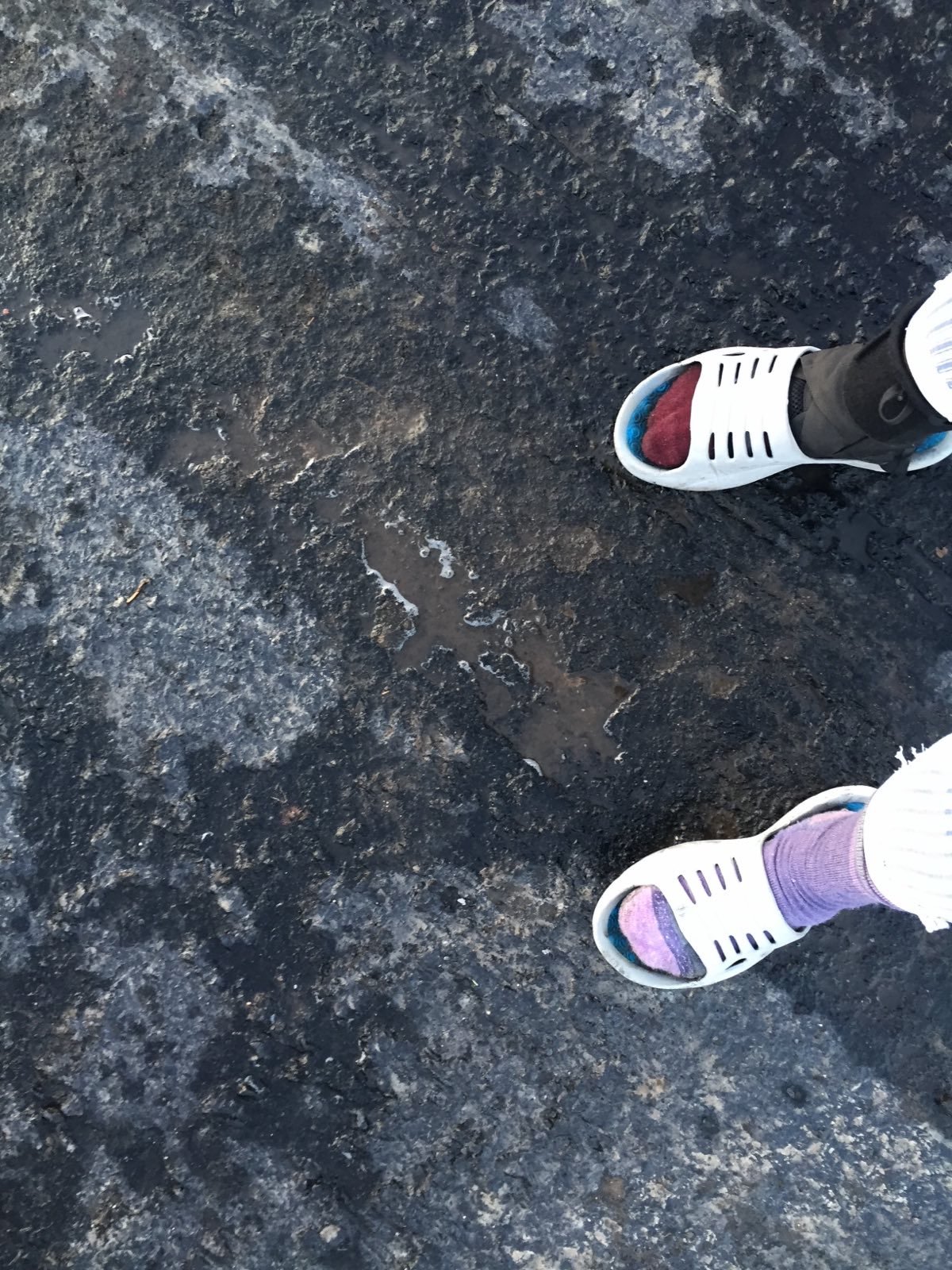
Small acts of kindness
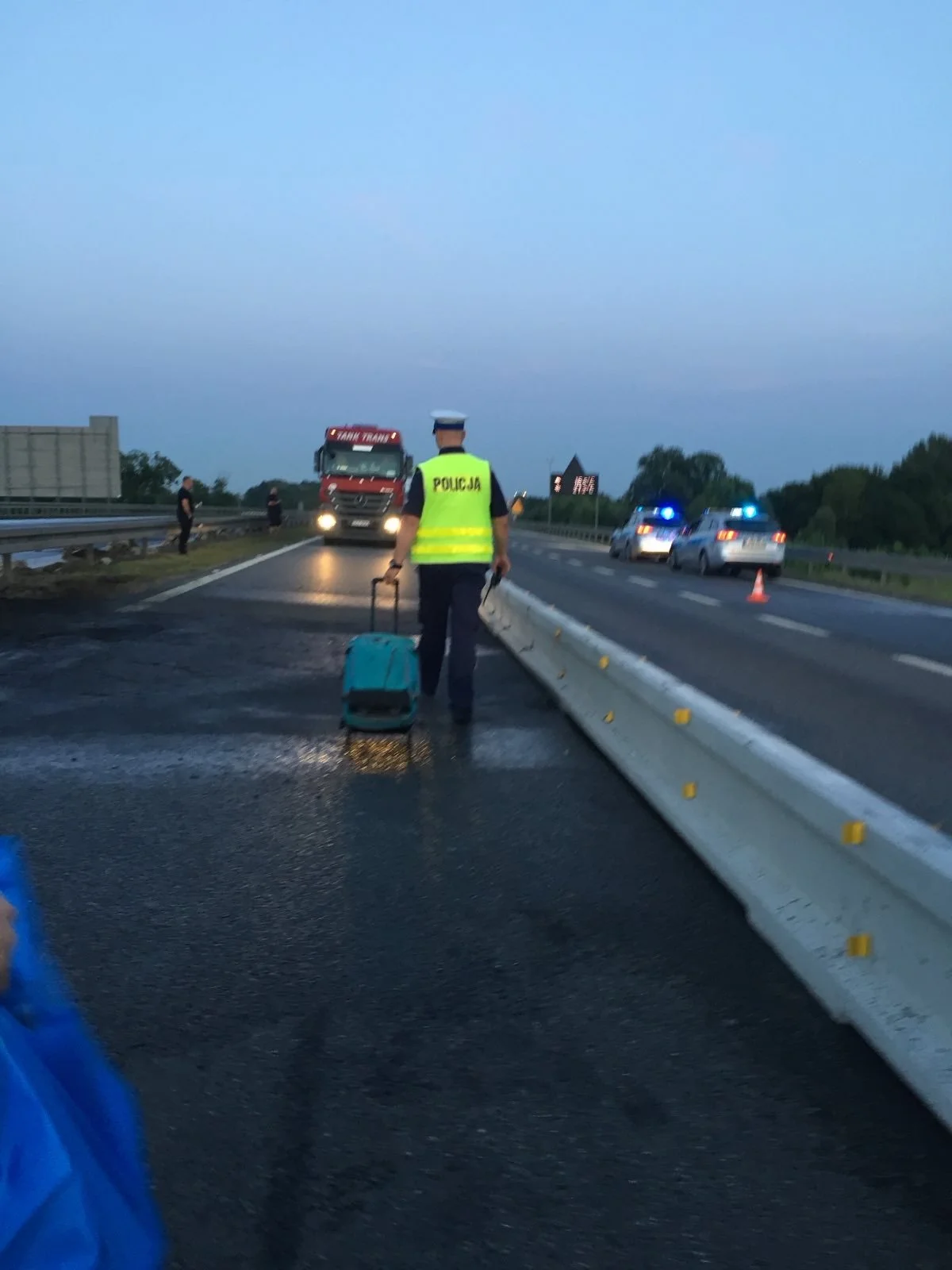
Finally leaving the scene
— ✦ — ✦ — ✦ —
The Shell That Was Left
When the fire was finally out and the car cooled enough to approach, I walked over to what remained.
There was almost nothing recognizable.
The tires had melted into small black pools.
The windows were gone.
The interior was nothing but a charred metal frame.
My purse, keys, daughter’s belongings — vanished.
Her guitar was nowhere to be found.
Clothes, shoes, bags — all burned into dust.
The only things left, bizarrely, were fragments of a paperback novel.
Charred around the edges, curled by heat, but still legible enough to recognize.
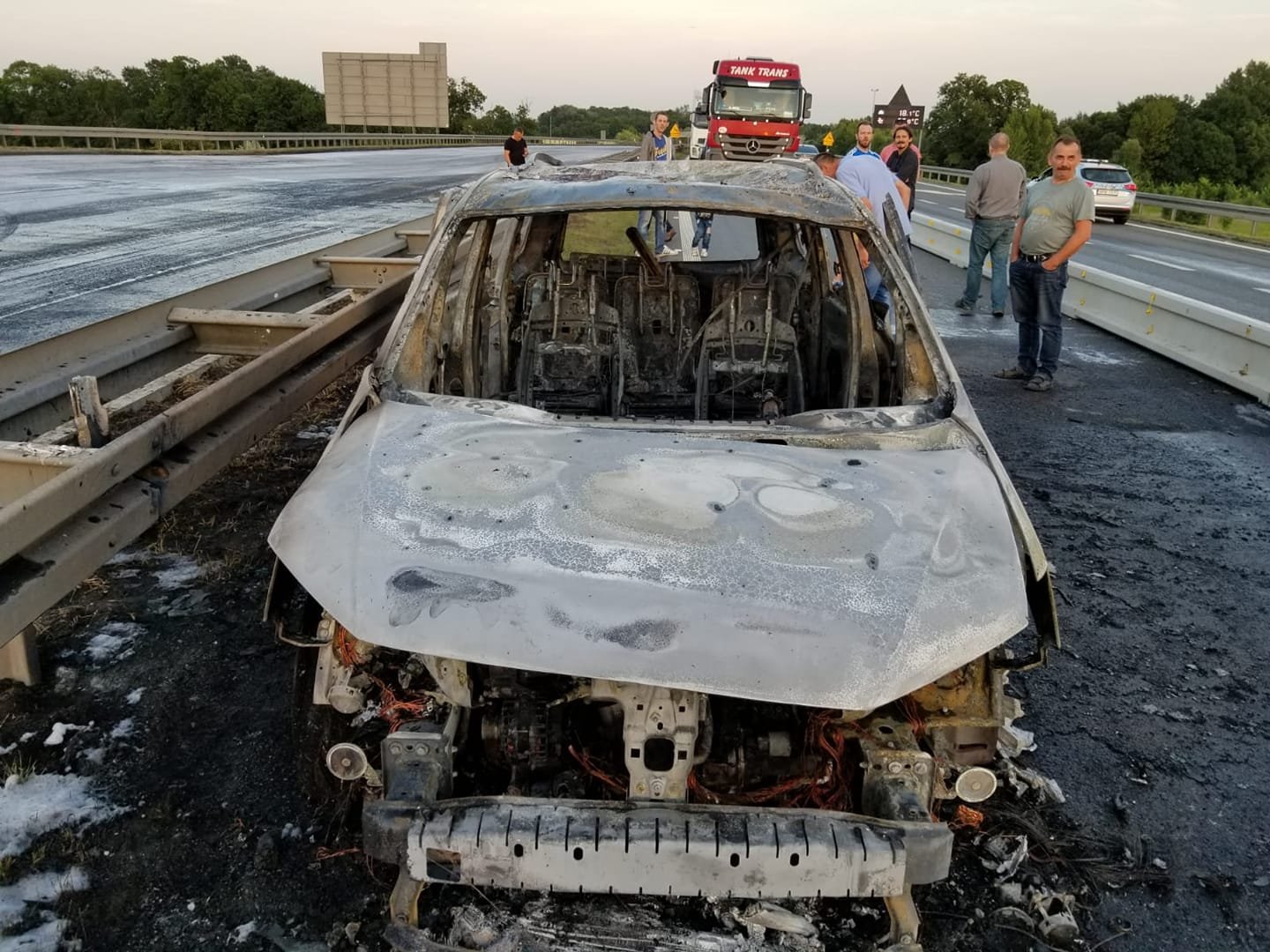
Nothing usable remained
When the Body Doesn’t Recalibrate
My first panic attack happened on the flight home from Europe - sudden, bewildering, nothing like the clean fear I'd felt during the fire itself.
I had never had one before.
This wasn’t like the waterspout.
There was no gentle extinguishing of the pattern.
No gradual settling.
Instead, everything generalized:
airplanes felt dangerous
loud engines felt dangerous
sudden sounds felt dangerous
anything involving heat or fire or transportation felt dangerous
For months afterward, I couldn’t file the insurance paperwork. I would open the document, feel my chest tighten, and close it again. Even typing two sentences made my heart race.
My nervous system had not filed the experience away.
It had internalized it.
Same body.
Same person.
Different storm.
Completely different outcome.
— ✦ — ✦ — ✦ —
Two Disasters, Same People, Different Reactions
The waterspout taught me the elegance of an adaptive nervous system — the way the body reacts, learns, and returns to safety.
The fire taught me what happens when the body can’t find its way back.
And both taught me something else entirely:
The same family can live the same moment and walk away with different stories.
And the same person can experience two storms and emerge changed in entirely different ways.
There is no “right” reaction.
There is only the reaction that the nervous system produces in the exact conditions it was given.
Some storms pass through us.
Some settle inside us.
And sometimes — sometimes — the kindness of strangers is the only thing that holds us while the body learns how to come home again.