Part 1: The Storm that Passed
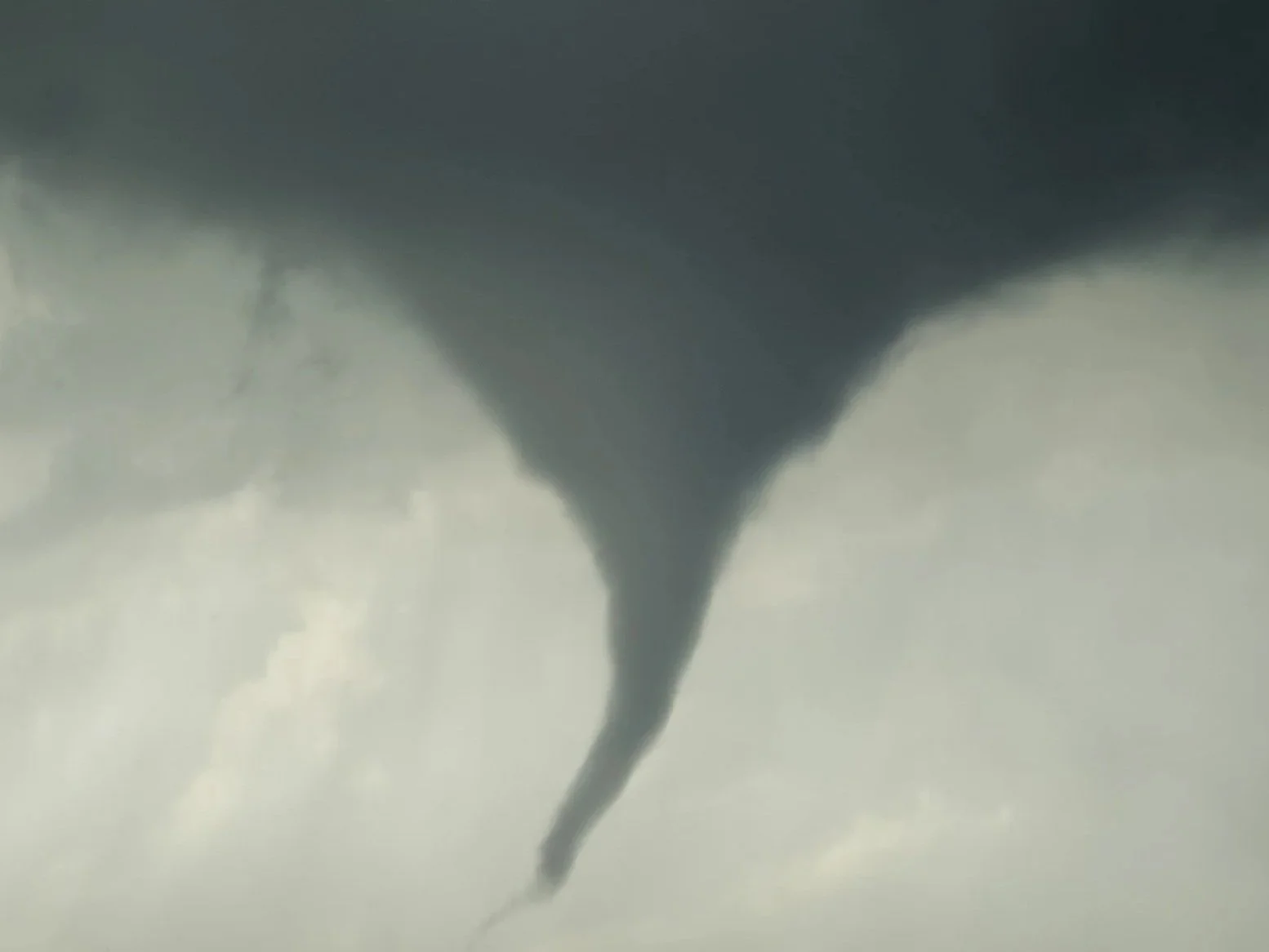
I woke early in the morning to an unusual high-pitched noise threading through the stillness. A thin, rising whine that didn’t belong to the quiet coastline. Our tent shuddered once, then again, harder. The wind was blowing toward the ocean, pulling the air outward instead of pushing it inland. Storms weren’t supposed to do that — the wrongness of it hit me before I fully opened my eyes.
I nudged my husband awake.
“Something’s not right.”
Sleepy and unconcerned, he mumbled, “It’s just a storm.”
But my body had already shifted.
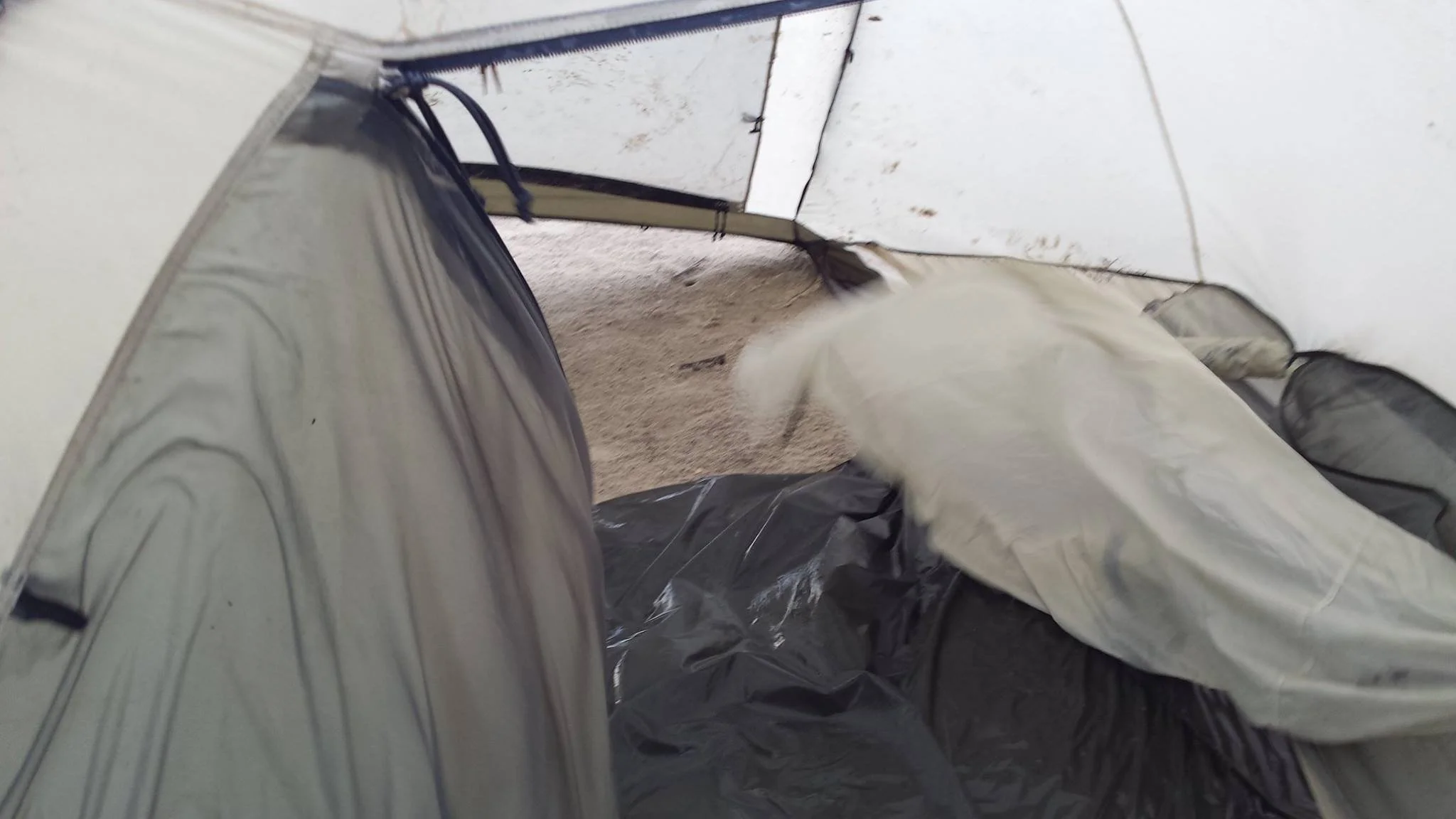
I pulled on whatever clothes I could grab and scrambled out of our tent to get the kids. As I reached their tent, a violent gust hit and the entire structure collapsed on top of them. They clawed their way out — small hands pushing against wet canvas, sand whipping around us in frantic spirals — while the wind roared like a living thing.
I rushed them toward the car. One child froze completely, terror locking his body in place. His older sister scooped him up and carried him — practical, focused, already stepping into responsibility mode. We stumbled through the dunes as wind and rain whipped our faces.
And through all of this, I didn’t feel afraid.
No panic.
No shaking.
No emotion at all.
Just instinctive, razor-sharp clarity:
get the kids safe — move — act now — think later.
My husband was in the same state, grabbing essentials, both of us running entirely on emergency circuitry.
If someone had asked me right then, Are you scared?
I would have said no — and meant it.
— ✦ — ✦ — ✦ —
Chaos, Comedy, and the Wind
We got the kids into the car first — wide-eyed, shivering. Only after they were secure did we turn back toward what was left of our campsite.
The waterspout itself had already dissipated, but the storm behind it was ferocious — horizontal rain, violent gusts, sand and spray whipping across the beach.
Clothes and papers lifted into the air like startled seabirds.
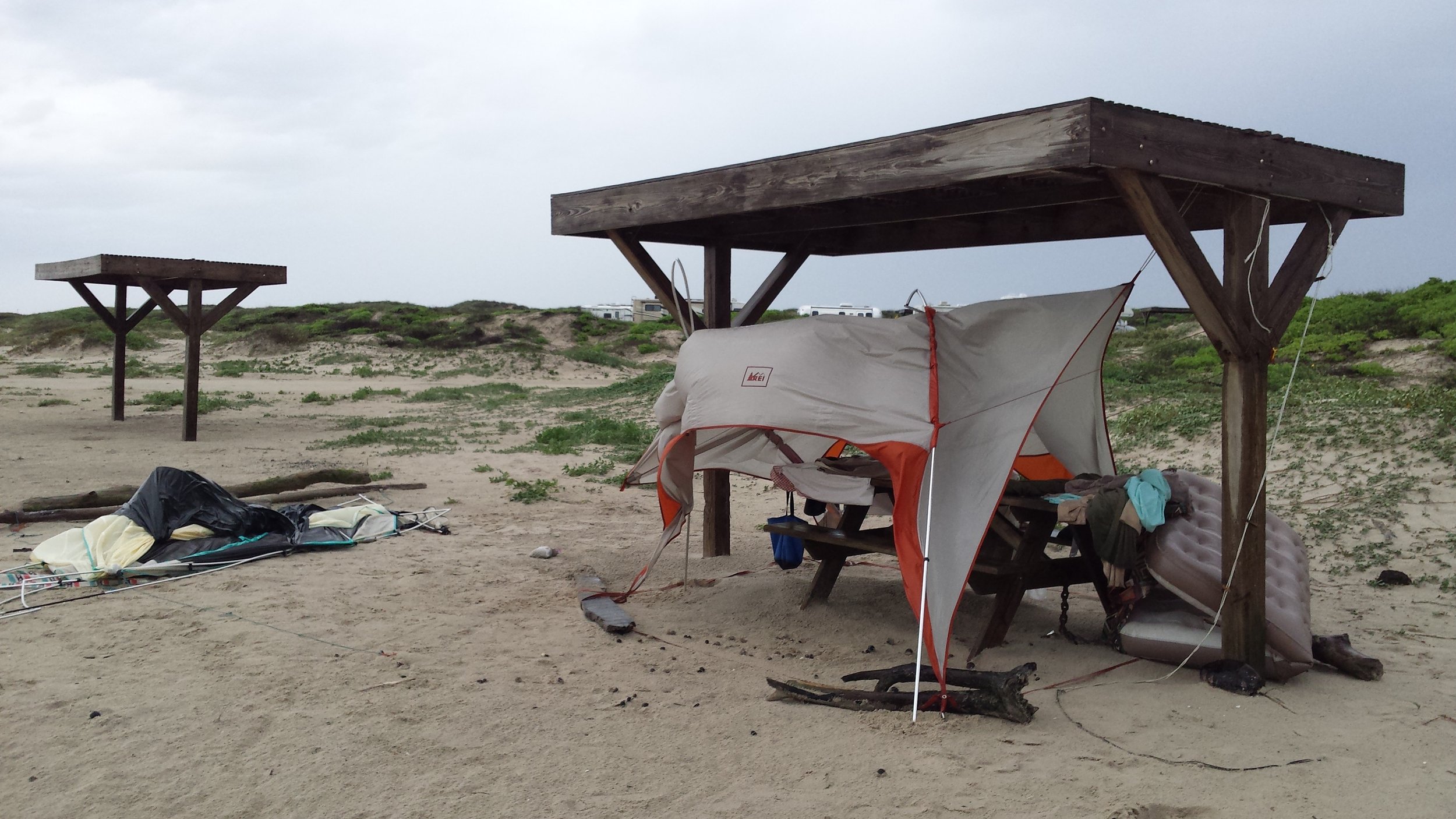
Everything at the campsite was either airborne or soaked.
We sprinted after whatever we could salvage, grabbing shirts mid-flight, snatching backpacks before they slid into the water. Our tents and shelters were irreparably shredded. One of the tent poles was twisted like a spaghetti noodle.
When we finally gave up and climbed into the car ourselves, everyone was soaked to the skin. Rain blew sideways, lightning cracked, and puddles formed at our feet.
We sat there shivering, teeth chattering.
And in the stunned quiet that followed, the youngest suddenly announced — with absolute joy:
“MY HOMEWORK BLEW INTO THE OCEAN! THIS IS THE BEST DAY OF MY LIFE!”
— ✦ — ✦ — ✦ —
I actually laughed.
Even then.
Same storm.
Same moment.
Five entirely different internal realities: emergency response, elation, and terror.
Different People, Different Storms
When we talked about that morning later, each of us remembered it differently:
One child declared it the best moment of his entire life, specifically the triumphant instant when his homework blew heroically into the ocean.
The child who froze couldn’t talk about it afterward — not for years. His whole body reacted if we even mentioned it, sometimes angrily shoving us away. Three years later, he finally wrote about it in a school essay.
Our daughter stepped immediately into helper mode — guiding the younger ones to safety, holding doors, steadying backpacks — and felt genuinely proud afterward.
My husband remembered structural details: which poles bent, which stakes pulled loose.
I remembered only one priority: get the children to safety.
Same storm.
Same family.
Five nervous systems, five stories, five timelines.
— ✦ — ✦ — ✦ —
When the Body Remembers Later
In the weeks that followed, the real aftermath surfaced.
The next time a windstorm swept across our home — the kind of powerful, unbroken winds that roll down from Canada across the plains of Wyoming — our windows shook so hard the glass rattled in its frame.
And my body reacted instantly.
A jolt.
A tightening.
My heart picking up speed.
It wasn’t the sound that triggered me.
It was the force — the same kind of power that had collapsed the kids’ tent.
The second windstorm brought a smaller surge.
The third, hardly anything.
By the fourth, nothing at all.
That’s what adaptive recovery looks like:
The body generalizes (“strong wind = danger”)
The body compares (“this wind isn’t that wind”)
The body recalibrates
The pattern extinguishes
I hadn’t felt afraid during the event.
But afterward, my body remembered —
and then, slowly and naturally, it learned it was safe again.
Not All Storms Resolve This Way
That storm left us sandy, soaked, cold, exhausted, and missing all our camping equipment — but eventually, my system settled. The activation faded. Life resumed its rhythm.
Some storms do that.
They hit hard, pass through, and leave only a faint echo.
But not all storms resolve so cleanly.
Some linger.
Some mark the body more deeply.
Some reshape how we move through the world afterward.
I didn’t understand that yet.
But I would learn it — on a very different day.